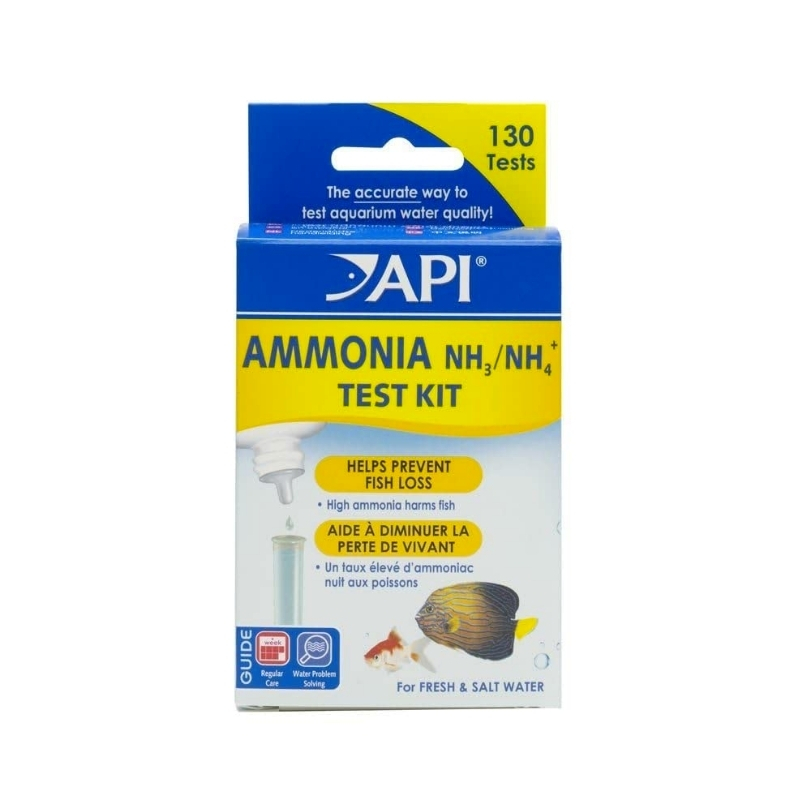
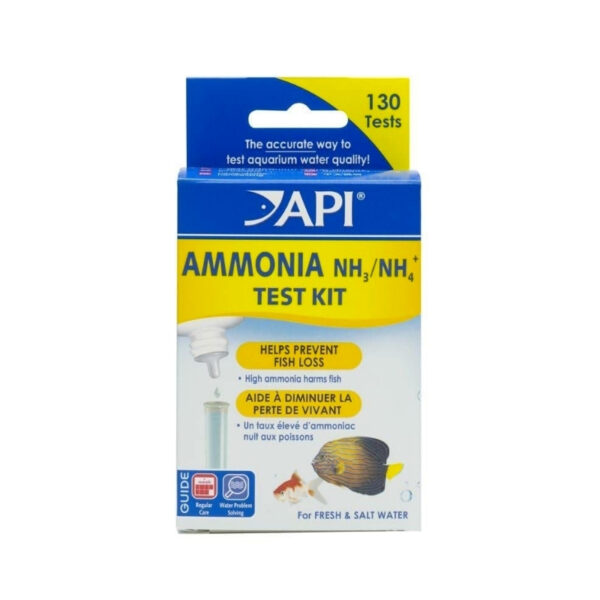
API Ammonia Test Kit (130 Test)
₹1,650.00
- Measures ammonia from 0–8 ppm
- Suitable for freshwater and saltwater aquariums
- Performs up to 130 tests
- Mercury-free salicylate test
- More accurate than most test strips
- Essential during aquarium cycling
- Detects ammonia before fish show symptoms
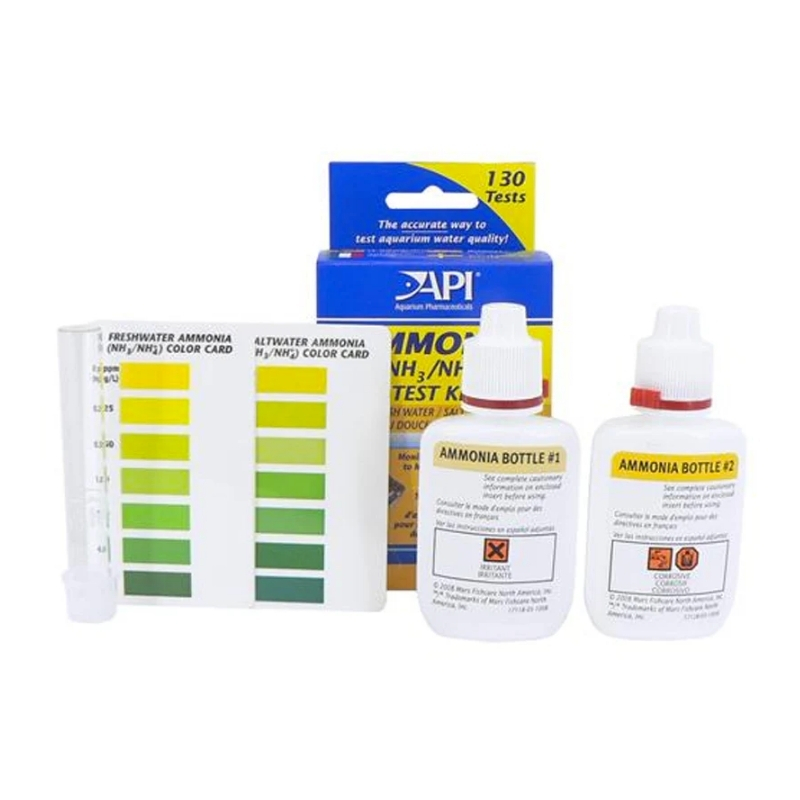
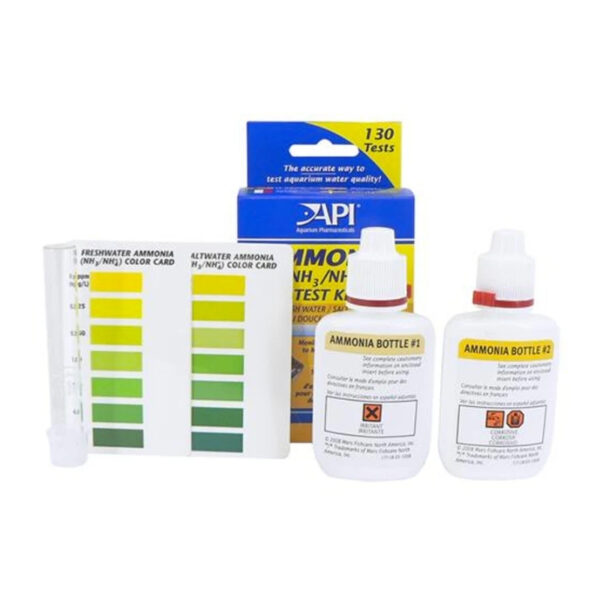
- Includes glass test tube and colour charts
- Trusted by hobbyists worldwide
- Made in USA
In stock
Product Information
API Ammonia Test Kit (130 Tests) – Professional liquid test kit for accurately measuring ammonia (NH₃/NH₄⁺) levels from 0–8 ppm in freshwater and saltwater aquariums. Essential for aquarium cycling, diagnosing fish stress, preventing ammonia poisoning, and maintaining healthy water quality. Performs up to 130 tests.
The API Ammonia Test Kit is an essential water testing tool designed to accurately monitor ammonia levels in both freshwater and saltwater aquariums. Ammonia is one of the most dangerous substances in an aquarium and is a leading cause of fish stress, illness, and mortality when left unchecked.
Detect the #1 Cause of Fish Loss Before It’s Too Late
Ammonia is one of the most dangerous compounds found in aquariums and is often referred to as the number one killer of aquarium fish. It is continuously produced from fish waste, uneaten food, decaying plants, and other organic matter. Even crystal-clear water can contain dangerous ammonia levels that are invisible to the naked eye.
The API Ammonia Test Kit provides fast, accurate measurement of total ammonia (NH₃/NH₄⁺) from 0 to 8 ppm, helping you detect problems before fish begin showing signs of stress.
Using a liquid salicylate-based testing method, this kit delivers more reliable results than many test strips and is suitable for both freshwater and saltwater aquariums.
Why Aquarium Hobbyists Choose API Ammonia Test Kit
- Measures ammonia from 0–8 ppm
- Suitable for freshwater and saltwater aquariums
- Performs up to 130 tests
- Mercury-free salicylate test
- More accurate than most test strips
- Essential during aquarium cycling
- Detects ammonia before fish show symptoms
- Includes glass test tube and colour charts
- Trusted by hobbyists worldwide
- Made in USA
- Why Should You Test Ammonia?
Ammonia can increase because of:
- New aquarium cycling
- Overfeeding
- Overstocking
- Dead fish
- Decaying plants
- Dirty filters
- Power failures
- Filter media washed in chlorinated water
Testing ammonia regularly helps prevent unnecessary fish losses and allows corrective action before the problem becomes serious.
When Should You Test?
API recommends testing:
- Several times each week during the first 4–6 weeks of a new aquarium
- Weekly in established aquariums
- Immediately if fish appear stressed, stop eating, or gasp at the surface
- After adding new fish
- After medication or filter maintenance
What’s Included?
- Ammonia Test Solution #1
- Ammonia Test Solution #2
- Glass test tube
- Freshwater colour chart
- Saltwater colour chart
- Instruction booklet
Total Tests: Approximately 130
Country of Origin USA
Expert Recommendation from Something Fishy
Every aquarium owner should own an ammonia test kit. Most fish losses blamed on “disease” are actually caused by poor water quality. Since ammonia is invisible, testing is the only reliable way to know whether your aquarium is safe.
If you keep expensive fish such as Arowana, Discus, Flowerhorn, Koi, marine fish, or shrimp, an ammonia test kit is one of the best investments you can make.
Frequently Asked Questions
For most aquariums, the ideal ammonia level is 0 ppm. Any detectable ammonia should be investigated, especially in established tanks.
Every 2–3 days while cycling a new aquarium
Weekly in established tanks
Immediately if fish are gasping, inactive, or not eating
After adding new fish or after a filter problem
Yes. Ammonia is completely invisible. Clear water does not necessarily mean healthy water.
Liquid test kits like the API Ammonia Test Kit are generally considered more accurate and easier to interpret than many test strips, especially when monitoring aquarium cycling. Experienced hobbyists often recommend liquid kits for this reason.
Yes. API Ammonia Test Kit measures total ammonia, so it may still show ammonia after using API Ammo Lock because the ammonia has been detoxified rather than removed.
This is one of the most common points of confusion among hobbyists.
A slight 0.25 ppm reading is a common discussion among aquarium hobbyists. Before assuming there is an ammonia problem, ensure you follow the instructions exactly—shake the reagents properly, wait the full 5 minutes, and read the colour only after the recommended waiting time.
Yes.
The kit includes separate colour charts for both freshwater and saltwater aquariums.
Yes. Ammonia in an aquarium is usually produced by fish waste and decomposing organic matter—not by the water source itself. Regardless of whether you use municipal, borewell, or RO water, ammonia testing remains important.
Absolutely. High-value fish are often more susceptible to poor water quality. Routine ammonia testing can help detect problems early and prevent costly losses.
Shipping & Returns
We deliver all over India. For full details of the delivery options we offer, please view our Delivery information
We hope you’ll love every purchase, but if you ever need to return an item you can do so within a stipulated time of receipt which may vary from product to product. For full details of how to make a return, please view our Returns information
Related products
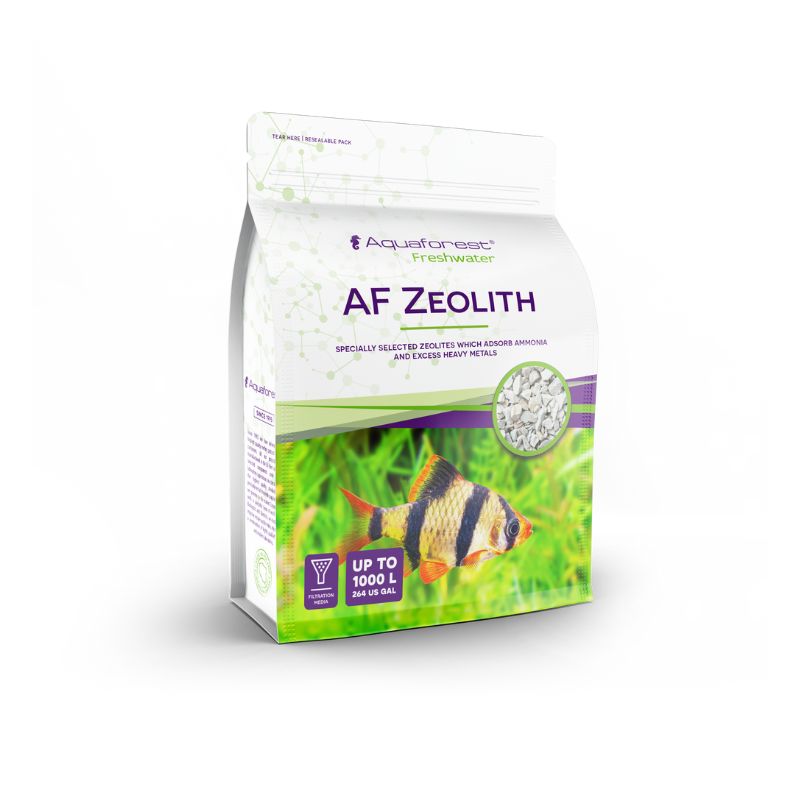
Aquaforest Zeolith 1000 ml
Original price was: ₹1,220.00.₹1,060.00Current price is: ₹1,060.00.
Reef Revolution ProBio Blast
Price range: ₹2,050.00 through ₹3,300.00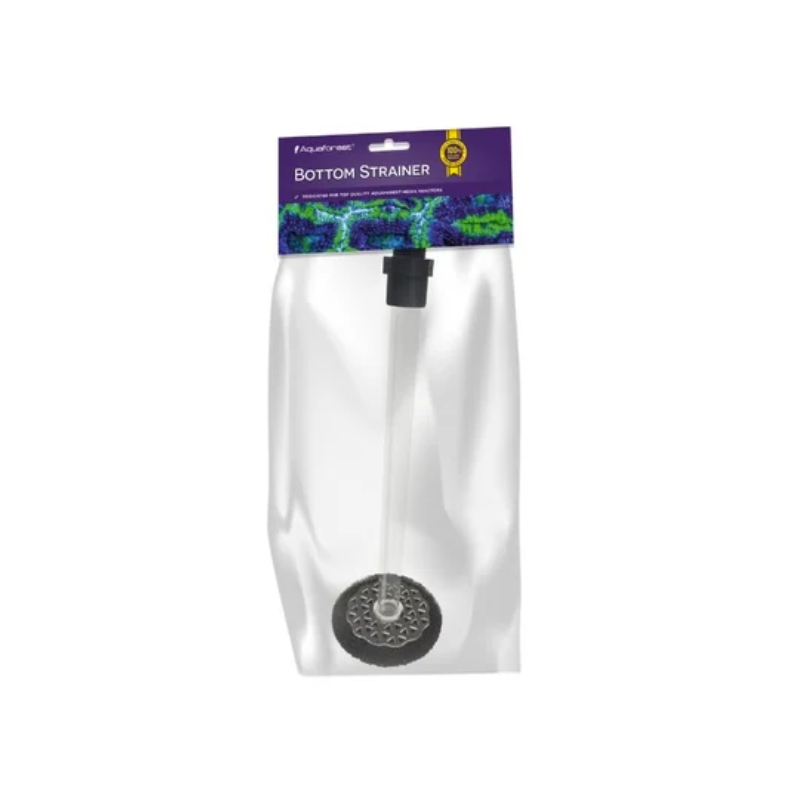
Bottom Strainer for Aquaforest Media Reactors
Price range: ₹1,260.00 through ₹2,520.00